I know what you’re thinking, “You don’t have to tell me how to taste coffee, I’ve had plenty of experience.” Or maybe you think that you can just taste it like everything else we eat or drink. And well, you’re right. You can taste coffee like that. But not all coffee is created equal, and learning to taste those differences is what I am here to tell you about.
In the world of coffee, tasting coffee is done in a way known as “cupping.” The purpose of a coffee cupping is so that there is a standardized way for anyone in the coffee industry around the world to taste coffee the same way. The reason for that is because there are so many variables that can affect the taste of coffee. Anything from the amount of grounds you use, to the brew method, and even the temperature of the water can affect the flavors we perceive.

Now, how does one set up a cupping? When having a cupping, coffee professionals use bowls around 7 fl oz. The standard grind size is most accurately measured by using a sieve, and testing how much coffee falls through, but simply put it should be a medium fine grind. The amount of coffee should be measured at 1.63 grams for every ounce of water, and your water should be brought to a boil, then allowed to cool for a few seconds. Coffee cuppings typically have at least a few different coffees to taste. You would begin by setting up your bowls with same amounts of each coffee in them. You would then prepare your water and pour it over the grounds until it hits the rim of the bowl. Once each bowl is filled, a timer is set for 4 minutes.
Once the time is up you will “break the crust.” Using a special coffee cupping spoon (pictured below), you must scrape across the hardened coffee ground crust that has formed, which releases the aroma of the coffee. Once you have done that for all the coffee, using two cupping spoons, gently scoop out the rest of the grounds until you have a clean cup of coffee. Now begins the process of actually tasting the coffee. Taking your spoon, scoop up a bit of coffee, bring it to your lips and slurp. You heard right, slurp, it’s not considered rude in this setting. This allows the coffee to cover all of your taste buds. And that’s it! You’ve cupped coffee!
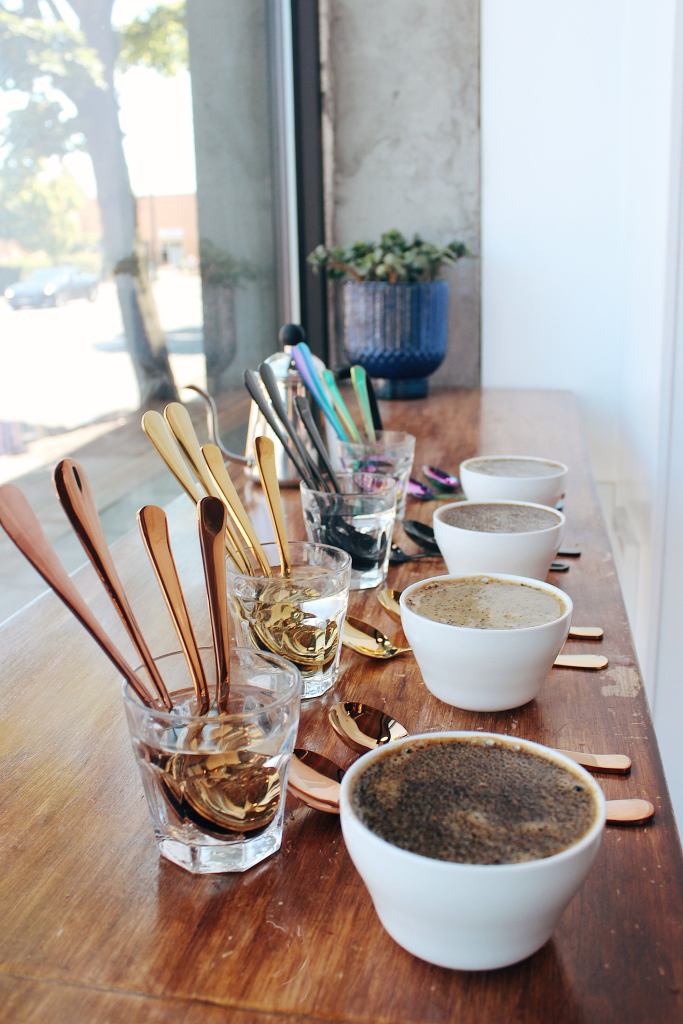
The first time you go to a coffee cupping, you may still not quite understand how to taste coffee. You may be confused as to why that one guy was saying he tasted floral notes of jasmine or chocolate covered hazelnut. Why does he taste that and you still just taste… coffee? Coffee is absolutely an acquired taste, and when tasting coffee it can be hard to attribute flavor notes in the coffee with everyday foods. I have been in specialty coffee for two years and I am still learning how to taste coffee. It is so complex that people even become licensed Q-Graders, which is the coffee equivalent of a sommelier. Something that can help you learn to taste specific flavor notes in coffee is the Specialty Coffee Association’s Flavor wheel.
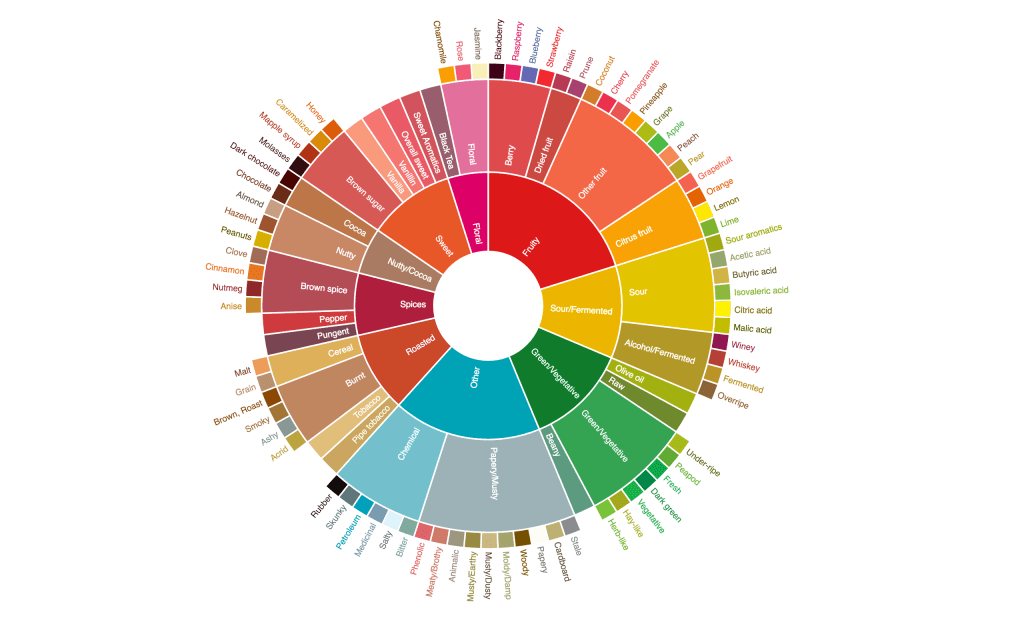
As you can see, the flavor wheel is broken up into categories, such as cocoa, spices, or fruity. This helps you to more easily narrow down what type of flavor you are tasting, and keep working your way to something more specific from there. And just as cupping is a universal way to taste coffee, the flavor wheel is a universal way to describe coffee. Because you may taste a Reese’s Peanut Butter Cup, but a coffee farmer in Brazil may not know what exactly that is.
If you really don’t believe me that your coffee could taste floral and tea like, or chocolaty, or even like blueberries, I recommend searching for your closest specialty shop. Many shops offer public cuppings once a month, or every few months, to introduce people to all the interesting variations coffee can have! Or perhaps you want to try it from the comfort of your own home, in which case I would recommend looking for an Ethiopian coffee from your coffee roaster of choice to brew up however you prefer. No matter how you choose to taste coffee, have fun with it and remember that whatever you taste in coffee can be unique to you and your tastebuds, so don’t worry if you don’t taste exactly what the roaster labels as the notes. The most important thing is that you drink it how you like it!
 Kelsey Makes Coffee